
If you’ve spent any time online looking for ways to earn income, you’ve probably come across the term affiliate marketing. It sounds simple, and in many ways it is. But between the big income claims and the unfamiliar jargon, it’s hard to know what’s real and where to start.
This guide explains affiliate marketing for beginners in plain language. You’ll learn what it is, who is involved, how affiliates get paid, and what to be careful about along the way.
What Is Affiliate Marketing?
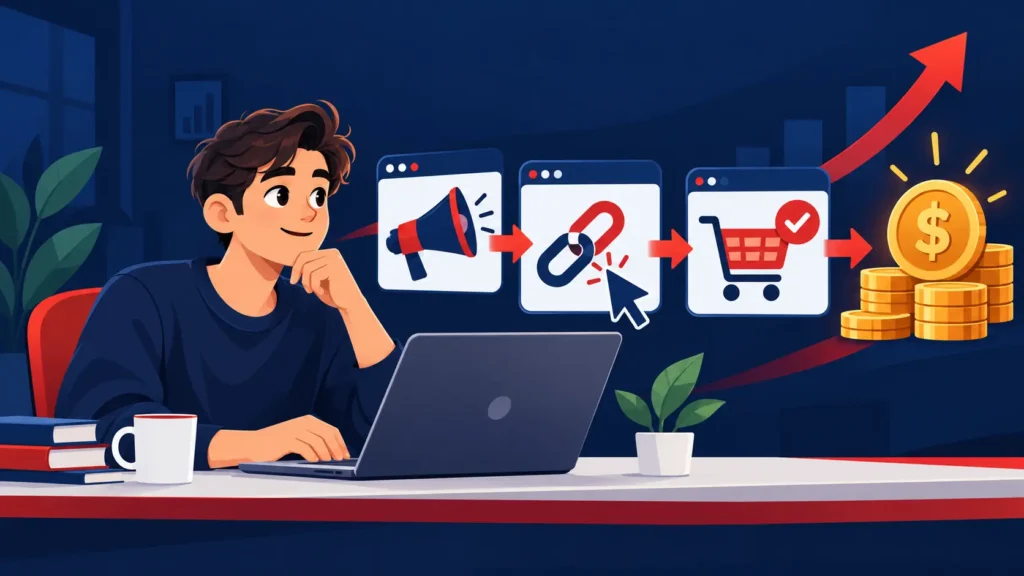
Affiliate marketing means recommending a company’s product or service and earning a commission when someone buys through your unique link. The buyer pays the same price whether they use your link or not. The company simply shares a small part of the sale with you as a thank you for sending the customer.
A simple example: you write an honest review of a project management tool. A reader clicks your link, signs up, and becomes a paying customer. The company’s system records that the sale came from you, and you earn a commission.
That’s the whole idea. You’re not creating the product, handling payments, or dealing with customer support. Your role is to help people find something useful and explain it honestly.
Who Is Involved in Affiliate Marketing?
Four parties are usually involved:
- The affiliate (you): You recommend the product to your audience.
- The merchant: The company that makes or sells the product. You may also hear them called the advertiser or the vendor.
- The affiliate network: An optional middleman that connects affiliates with merchants, tracks referrals, and handles payouts. Some companies run their own affiliate program without a network.
- The customer: The person who clicks your link and buys.
Understanding these roles helps you judge offers for yourself. For example, if a program has no clear way to track sales or explain payouts, that’s a sign to look more closely before promoting it.
How Does Affiliate Tracking Work?
When you join an affiliate program, you receive a unique link that includes your affiliate ID. When someone clicks it, a small file called a cookie is usually stored in their browser. If they buy within a set time window, the sale is credited to you.
Cookie windows vary a lot between programs. Some last a day, others last weeks or months. It’s worth checking this in the program’s terms, because it affects how likely you are to be credited when someone doesn’t buy right away.
How Do Affiliates Get Paid?
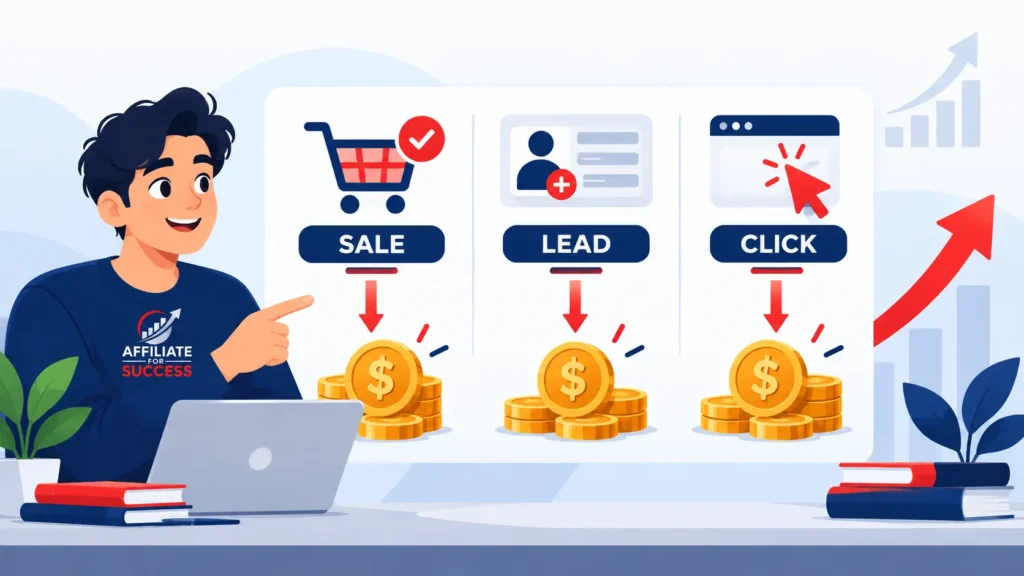
Programs generally pay in one of three ways:
- Pay per sale: You earn a percentage or a fixed amount when someone buys. This is the most common model.
- Pay per lead: You earn a commission when someone signs up, requests a quote, or submits a form, even if they don’t buy yet.
- Pay per click: You earn when someone visits the merchant’s site through your link. This model is less common today.
Some programs also pay recurring commissions. If you refer someone to a subscription product, you may earn again each month they stay subscribed. This can add up over time, but it depends on the customer staying.
Before joining any program, read the payout terms. Look at the minimum payout amount, how often payments are made, and which payment methods are supported. Before joining any program, read the payout terms. Look at the minimum payout amount, how often payments are made, and which payment methods are supported. You can also browse our list of the best affiliate programs for beginners.
Is Affiliate Marketing Worth It? Being Realistic
Affiliate marketing can be a legitimate way to earn online, but it is not quick or guaranteed. Building an audience takes time, and many beginners earn little at first. Results depend on the products you promote, your audience, your traffic, your content, and how consistently you show up. Learning the different ways to get visitors to your content is a big part of that.
Be cautious of anyone promising overnight results, guaranteed income, or “no work required.” If a claim sounds too good to be true, it usually is.
You also don’t need to buy an expensive course to begin. You can learn a great deal for free. If you do consider a paid course or tool, research it carefully first and read independent opinions.
Disclosure and Honesty Matter
If you earn a commission from a link, you should say so clearly. In the United States, the Federal Trade Commission expects affiliates to disclose their relationships in a way that readers will notice and understand. Other countries have similar rules.
A short, plain statement near your links works well, for example: “I earn a commission if you buy through this link, at no extra cost to you.” Beyond the legal side, honesty builds trust with your readers, and trust is what makes recommendations work. You can read our full affiliate disclosure to see how we handle it.

Common Mistakes Beginners Make
- Promoting products just because the commission is high
- Recommending something without researching it first
- Writing thin, sales-heavy content instead of genuinely helpful content
- Expecting results in a few days
- Forgetting to disclose affiliate links
Avoiding these puts you ahead of many people who start out.
Your Next Steps
Now that you understand the basics, you can move on to the next stage of the roadmap:
- Follow the full beginner roadmap on our Start Here page.
- Download the free Affiliate Success Blueprint, a short companion guide for beginners.
Frequently Asked Questions
What is affiliate marketing in simple terms?
It’s recommending a product or service and earning a commission when someone buys through your unique link.
Do I need a website to do affiliate marketing?
Not always. Some methods work without one, but your own site gives you a place to publish and build an audience you control.
How much does it cost to start?
You can start by learning for free. Costs only appear if you choose a website, paid tools, or paid traffic.
Can beginners make money with affiliate marketing?
Yes, it’s possible, but it takes time, and results vary widely. There are no guarantees.
How long does it take to see results?
It depends on your niche, content, and consistency. Many beginners need months of steady effort before seeing meaningful earnings. The right traffic sources can speed things up, but there are no shortcuts.
Is affiliate marketing legal?
Yes, as long as you follow the rules, especially disclosing your affiliate relationships clearly.
Do I need to buy a course?
No. You can learn a lot for free. Research any paid product before you buy.
Final Thoughts
Affiliate marketing is built on a simple idea: help people make good decisions, and earn a commission when your recommendation is useful. It rewards patience, honesty, and consistency far more than shortcuts. Start small, learn how each part works, and improve as you go.
Have more questions? Visit our full FAQs.
Affiliate disclosure: AffiliateForSuccess may earn a commission when you buy through links on this site, at no extra cost to you. We aim to give honest recommendations so you can make your own informed decisions.