
One of the quickest ways to get stuck in affiliate marketing is to believe you need a long list of tools before you can begin. Domain names, website builders, design software, email platforms, tracking tools. It can feel like you need to spend money and weeks of setup time before you’ve even tried promoting anything.
You don’t. This guide covers the affiliate marketing tools for beginners that are actually worth knowing about, what a simple starting setup looks like, and why you can often start with much less than you expect.
Do You Need a Website for Affiliate Marketing?
Not to get started. Many affiliate programs give their affiliates ready-made promotional materials, such as landing pages, sales pages, tracking links, banners, and email swipes. This means you can often promote an offer without building anything yourself.
That makes starting much simpler. Your first goal isn’t to build a complicated website. It’s to learn how to choose a good offer, get the right people interested, and send them to the right page.
A website is still a valuable long-term asset, because it gives you a place to publish and an audience you control. But it’s something you can add when you’re ready, not a barrier you have to clear on day one.
What You May Need as a Beginner
1. An affiliate program
Start by choosing a legitimate affiliate program and a product or service you genuinely believe could help your target audience. If you need help deciding, our guide to choosing a niche can point you in the right direction.
Once you’re approved, look inside the affiliate area for the promotional resources the program provides. You may find:
- Your unique affiliate link
- Ready-made landing pages
- Product sales pages
- Email templates or “swipes”
- Banner ads
- Social media graphics
- Tracking tools
- Training and promotional resources
Always check the program’s terms before using its promotional materials or advertising methods. Some programs limit where and how you can promote, and breaking those rules can cost you your commissions or your account.
2. A landing page
A landing page gives you a place to introduce an offer before sending someone to the affiliate sales page. The good news is you may not have to build one yourself. Some programs provide landing pages or pre-built funnels. If yours does, you can often use the link they give you and spend your time finding the right audience.
If a program doesn’t provide one, you can create your own later using a funnel or landing page platform.
3. An email marketing system
Building an email list isn’t required to make your first affiliate sale, but it can become an important part of your business over time. An email platform lets you collect subscribers and communicate with people who have given you permission to contact them. That direct line to your audience is something you own, unlike a social media following that can change with an algorithm update.
A few beginner-friendly options include:
You can start simple and learn email marketing as you go. Whichever you choose, only email people who have agreed to hear from you.
4. Content creation tools
You don’t need expensive software to create helpful content. A few useful beginner tools are:
- ChatGPT: for brainstorming ideas, outlines, research help, and improving your drafts.
- Canva: for simple graphics and social media images.
- Google Docs: for writing and organizing your content.
If you use AI tools, treat them as an assistant, not a replacement for your own experience and judgment. Always review and edit what they produce, and check facts before you publish. The goal isn’t producing the most content. It’s producing useful content that helps people make better decisions.
5. Basic traffic and research tools
You need a way to find people who are interested in the problem your product solves. Start with free tools:
- Google Search: to discover the questions people are asking.
- Google Trends: to see whether interest in a topic is growing or declining.
- Social media platforms: to learn what your target audience is talking about.
- Google Search Console: useful later if you decide to build a website.
You can explore paid traffic later, but it’s wise to learn the basics before spending significant money on advertising. To see the different ways people bring visitors to an offer, read our [traffic sources guide].
Your Simple Beginner Setup
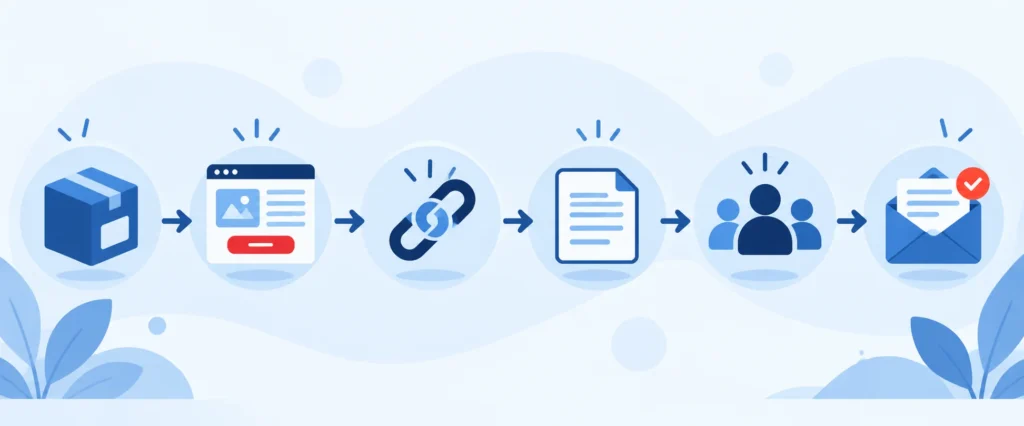
Here’s how little you can start with:
- Affiliate program: choose a product you want to promote.
- Affiliate landing page: use the page the program provides, when available.
- Affiliate link: your unique tracking link.
- Content: helpful posts, videos, emails, or social media content.
- Traffic: get interested people to your landing page or offer.
- Email list: build your own audience as you grow.
That’s enough to begin learning. You can add a website, advanced SEO tools, paid advertising, automation, and other technology once you actually need them.
Don’t Let Technology Stop You
A common beginner mistake is spending weeks choosing a domain, building a website, buying software, and designing graphics before ever promoting an offer. It feels productive, but it often delays the real learning.
Start with the simplest setup that lets you learn. If the affiliate program provides a landing page and promotional resources, use them. Your job is to find the right people, share useful information, build trust, and connect them with products that can genuinely help.
You can build a bigger marketing system as your experience grows.
Common Setup Mistakes to Avoid
- Buying tools before you know if you need them
- Spending weeks on design before promoting anything
- Skipping the program’s terms and rules
- Promoting a product you haven’t researched
- Forgetting to disclose that you earn commissions
- Expecting quick results from a good setup alone
Remember that tools don’t guarantee income. Results depend on the offers you choose, the people you reach, and how consistently you work at it.
Your Next Steps
- Read our beginner’s guide to what affiliate marketing is.
- Learn how to choose an affiliate marketing niche.
- Follow the full beginner roadmap on our Start Here page.
- Download the free Affiliate Success Blueprint, a short companion guide for beginners.
Frequently Asked Questions
What tools do I need to start affiliate marketing?
At minimum, an affiliate program and your unique link. Many beginners also use a landing page, an email platform, and simple content tools, but you can add these as you need them.
Can I do affiliate marketing without a website?
Yes. Many affiliate programs provide landing pages and promotional materials, so you can start without building a site. A website can be a useful long-term asset, but it isn’t required to begin.
Do I need an email list to make my first sale?
No. But building one early gives you a direct way to reach people who have given you permission to contact them.
Are free tools enough to get started?
For most beginners, yes. Free options for writing, basic graphics, and research are enough to learn the process.
Is it okay to use AI tools for my content?
Yes, as a helper. Review and edit everything, check facts, and add your own experience so the content is genuinely useful.
Should I pay for advertising right away?
It’s usually better to learn the basics first and understand your audience before spending significant money.
Do I need to follow the affiliate program’s rules?
Yes. Always read the program’s terms before using its materials or promotion methods.
Final Thoughts
A good beginner setup is simple. Choose one offer you believe in, use the resources the program already provides, create helpful content, and learn how to reach the right people. Everything else can come later. Start small, learn as you go, and add tools only when they solve a real problem.
Affiliate disclosure: AffiliateForSuccess may earn a commission when you buy through links on this site, at no extra cost to you. We aim to give honest recommendations so you can make your own informed decisions.